

5-Card Friday
A Bi-Weekly Update from the ITS UX Team
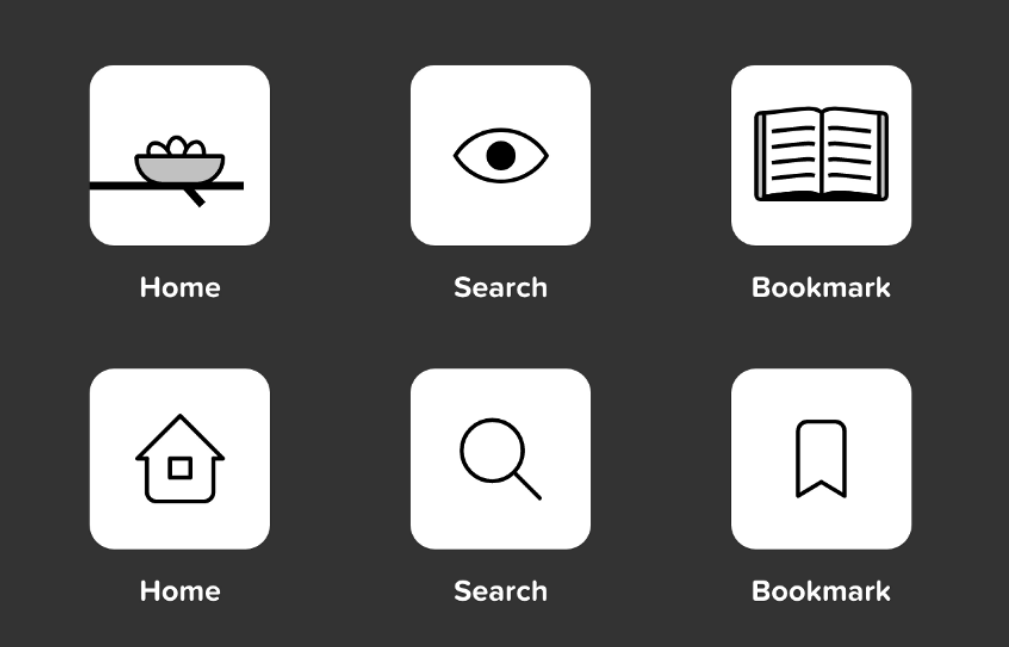
10 Tips to Design More Inclusive Products
The challenge in design is to create experiences that are adaptable, flexible, scalable, and most importantly, usable by as many people as possible. The goal for designers is to be advocates for improving the human experiences of everyone, not a measly few.
This article explores ways to make digital products more accessible, usable, and user-friendly for everyone.
Learn more on the back of this card.
Designing More Inclusive Products
In this article, the author shares a few ways we can move in the direction of building more inclusive, accessible, and accepting digital products.
Topics explored include:
- Designing with color
- WCAG & ADA
- Diversity in graphics
- Designing forms to be accepting of all genders
- Interview and include communities with different backgrounds & experiences in the conversation
- Adapt to context
- Enable customization
- Avoid industry literacy
- Design for left and right-handed users
- Don't break conventions
Read Full Article

Progressive Disclosure: Simplifying the Complexity
Modern apps and websites are becoming more and more complex. The more content and features we add to our products, the more complicated the interfaces become, and the more effort users have to invest in interactions.
An excess of information or choices can easily make people feel dissatisfied with the experience. This also leads to people being quickly overwhelmed.
Flip the card over to learn more.
Progressive Disclosure: Simplifying the Complexity
When it comes to selecting a product, people often choose the path of least effort. They don’t want to spend time learning how to use the app or website—they have a task to do and want to complete it as quick as possible, without putting too much effort into the process of interacting with a product. That’s why simple products usually win.
Check out the article to see 9 examples of progressive disclosure.
Read Full Article
Average UX Improvements Are Shrinking Over Time
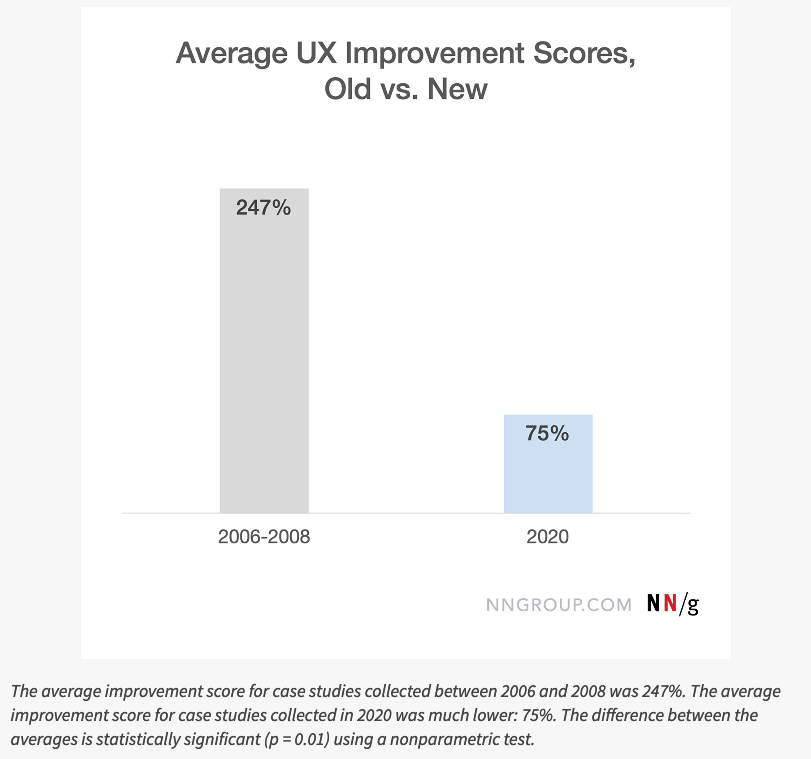
NNg has discovered that, on average, UX improvements have substantially decreased since 2006–2008: from 247% to 75% (a 69% decrease). This difference is statistically significant (p = 0.01)—we can be quite confident that average improvement scores are lower now than they were 12–14 years ago.
This trend means that UX has substantially advanced since 2006.
Flip the card over to learn more.
UX Improvements
At first glance, it might look like a decreasing trend in the average improvement resulted from a UX-focused redesign means that UX professionals have gotten worse over the years. We believe that the opposite is true. Over the past 14 years, the UX-design community has grown substantially—and so has our collective knowledge and experience.
This decrease in average improvement scores doesn’t mean we’re doing a bad job; it shows that, as an industry, we’ve done an excellent job over the past 10+ years. At the beginning of the human factors and usability movement, just about every product had substantial room for improvement.
Read Full Article
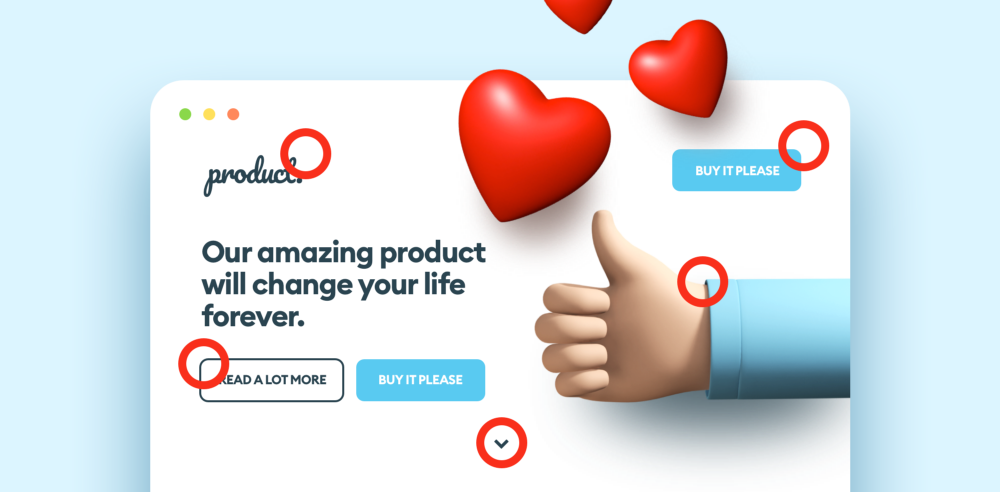
5 things that are killing your landing page
Landing page is a popular, yet quite specific kind of page. It often makes me wonder, why it is so hard these days, to find a landing page that is done well?
It would seem that we, as product designers, owners and users, are design-aware enough (compared to 10 years ago) — yet there’s one simple thing that everyone seems to forget:
The major purpose of a landing page is to sell a product or an idea. Nothing more, nothing less.
Flip the card over to learn more.
5 things that are killing your landing page
Knowing that, we should design landing pages with a very strict list of goals in mind. It’s not a beauty or creativity competition.
The page should be distinctive, yet not overwhelming. The message should be straight and to the point. The overall visual style should match the product’s characteristics. It should also be appealing to the target group. The shopping experience itself should be as quick, as easy and delightful as possible.
Read Full Article

What cognitive science can tell us about our social platform addictions
Social platform addiction described through behavioral tendencies, and design to counter this.
Flip the card over to learn more.
What cognitive science can tell us about our social platform addictions
In cognitive science, we describe this situation of returning to aversive conditions (returning to social platforms) as approach-avoidance conflicts. Succinctly, approach-avoidance conflicts happen when users are both rewarded and punished at the same time.
Users continue coming back to social platforms in search of rewards, only to get re-punished. Example rewards might include feeling part of many social circles, while example punishments might include feeling envy about the lifestyle of someone else.
Read Full Article