

5-Card Friday
A Bi-Weekly Update from the ITS UX Team
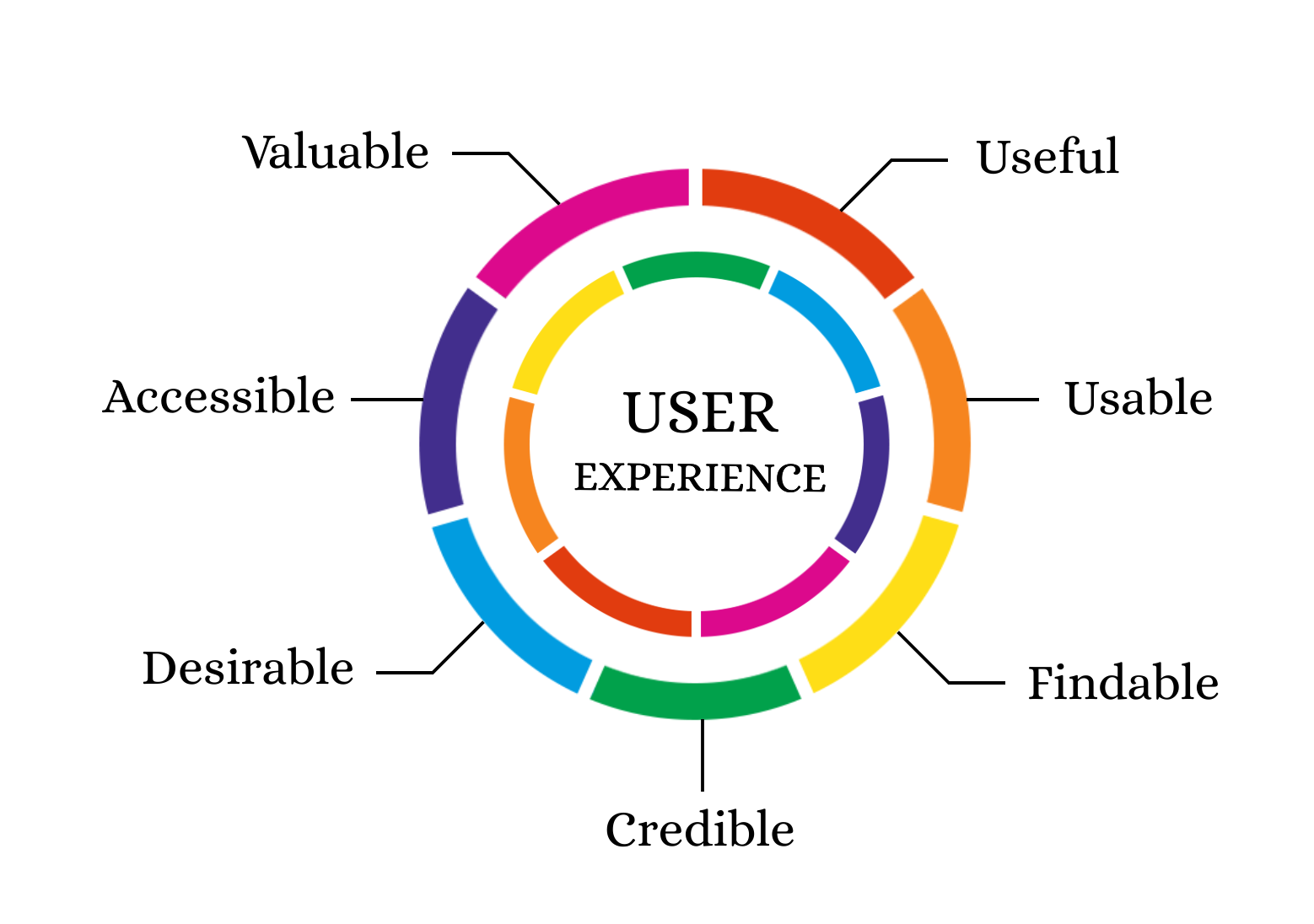
What is UX?
User experience (UX) is more than just user interfaces and making sites and apps "look good"—it involves visual, interaction, and conversion-centered design.
According to a study from the Oxford Journal Interacting With Computers, the goal of UX design in business is to "improve customer satisfaction and loyalty through the utility, ease of use, and pleasure provided in the interaction with a product."
Flip the card over to read some of our favorite definitions for UX.
Definitions of UX
"User experience" encompasses all aspects of the end-user's interaction with the company, its services, and its products.
NN/g
User experience refers to the singular and accumulated experiences that occur for users as a consequence of them interacting with an object in a given context.
uxdesign.cc
User experience (UX) focuses on having a deep understanding of users, what they need, what they value, their abilities, and also their limitations.
usability.gov
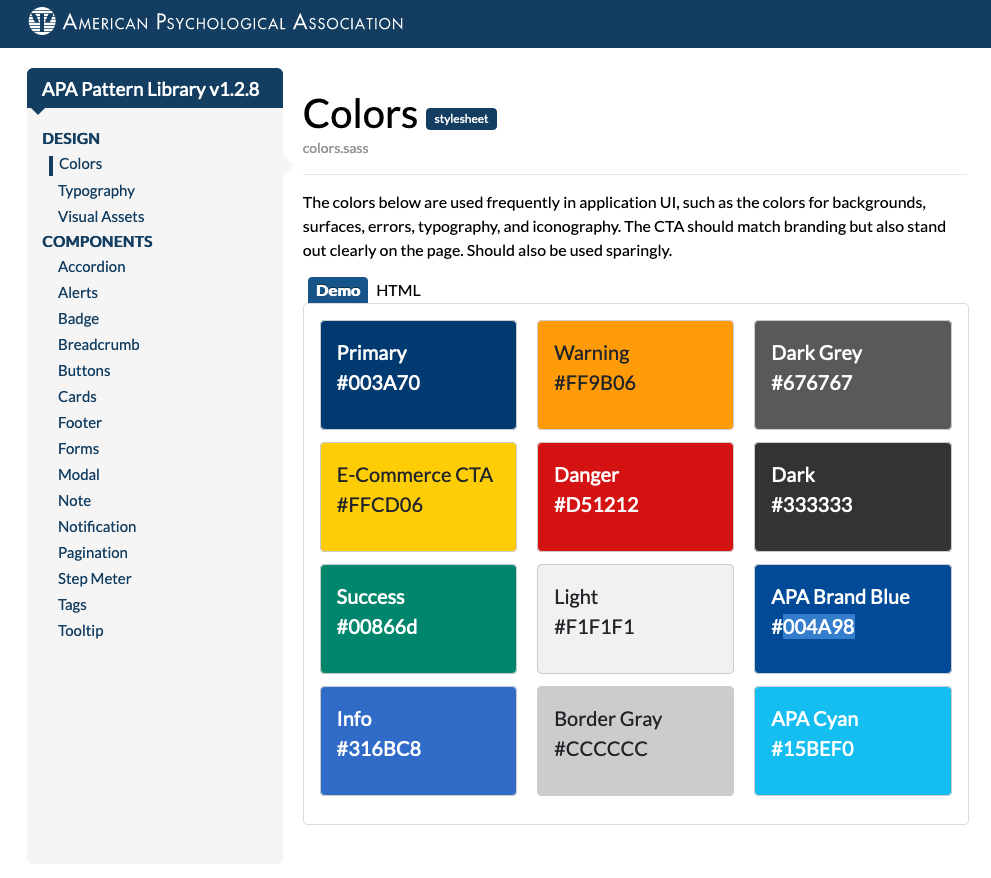
Have you seen the ITS UX Team's "Pattern Library"?
The ITS UX Team has been building out a pattern library for over a year now.
Learn more on the back of this card.
More about the ITS UX Team's Pattern Libary
The IUX Team's Pattern Library is a collection of user interface design elements and components which are used for the frontend design of APA’s web applications. The components promote the branding of APA and meet the standards of responsiveness and accessibility.
We are continually adding new components to the Pattern Library, including buttons, alerts, modals, and more.
The Pattern Library also generates a CSS file which is used in several web applications, including GradStudy and the Course Adoption System application.
Visit the Pattern Library
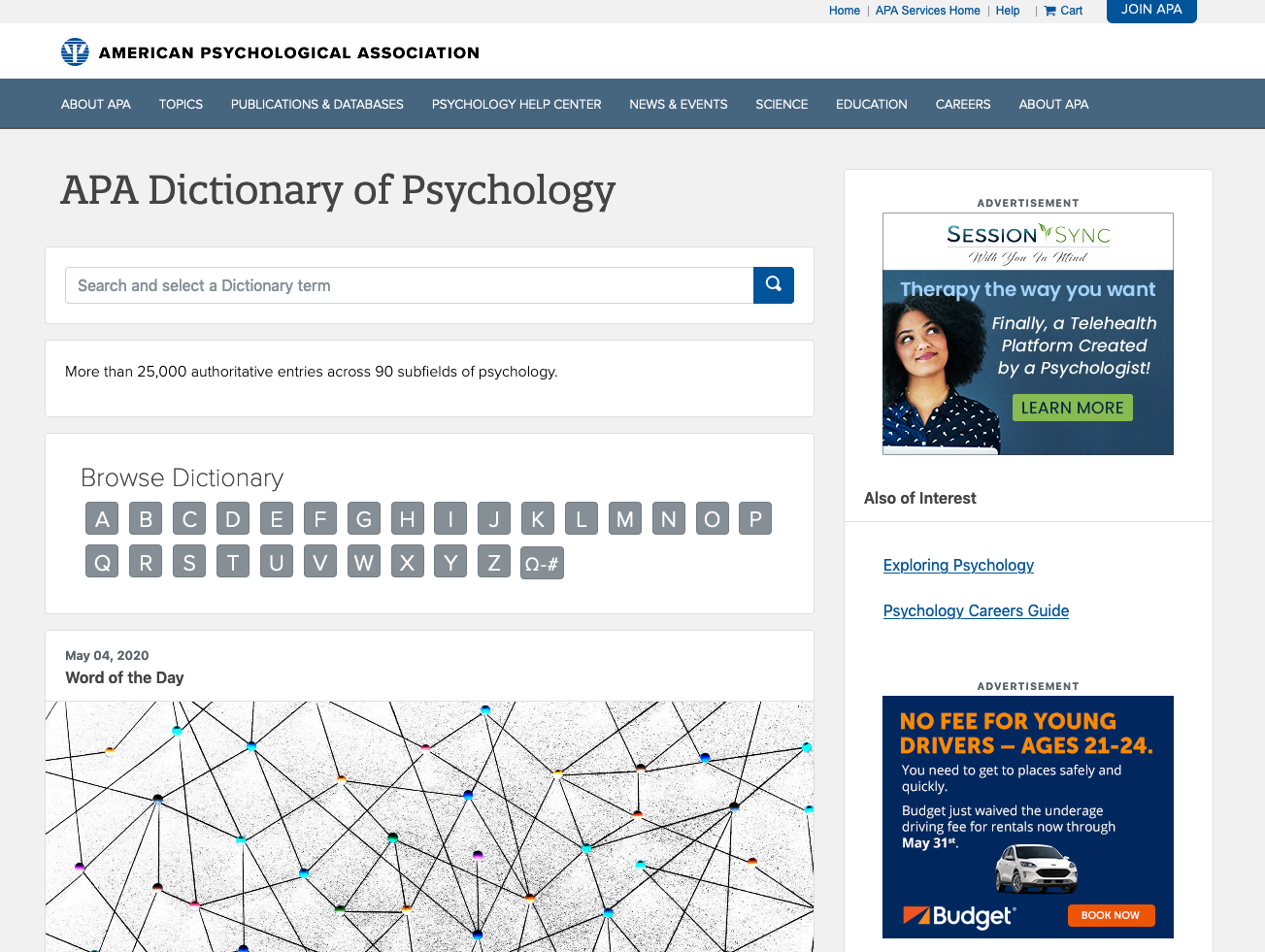
Ads are now on the APA Dictionary of Psychology site!
We've been monitoring the search engine optimization (SEO) strength of the Dictionary site since its launch in May 2018.
After seeing how popular the site has become and all the traffic it's been getting, it made sense to put ads on the site.
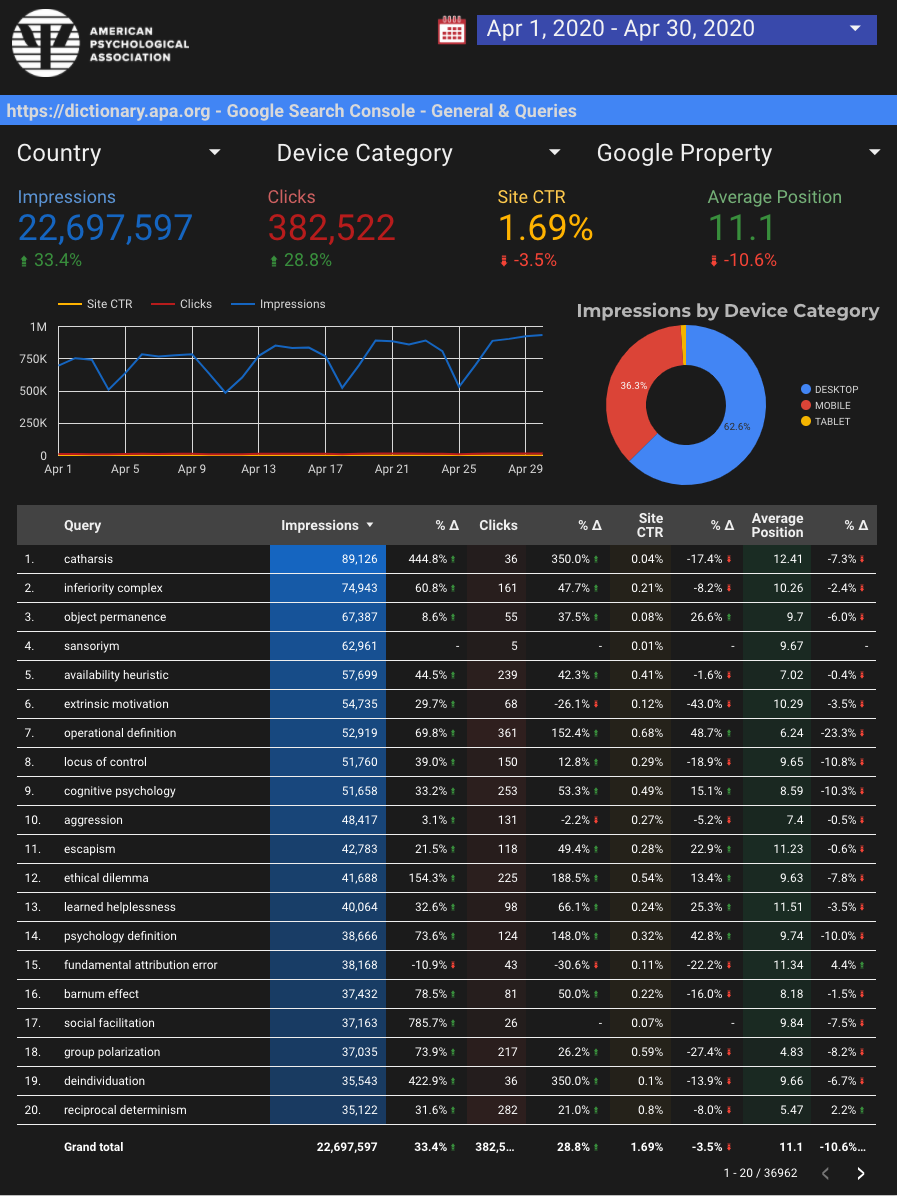
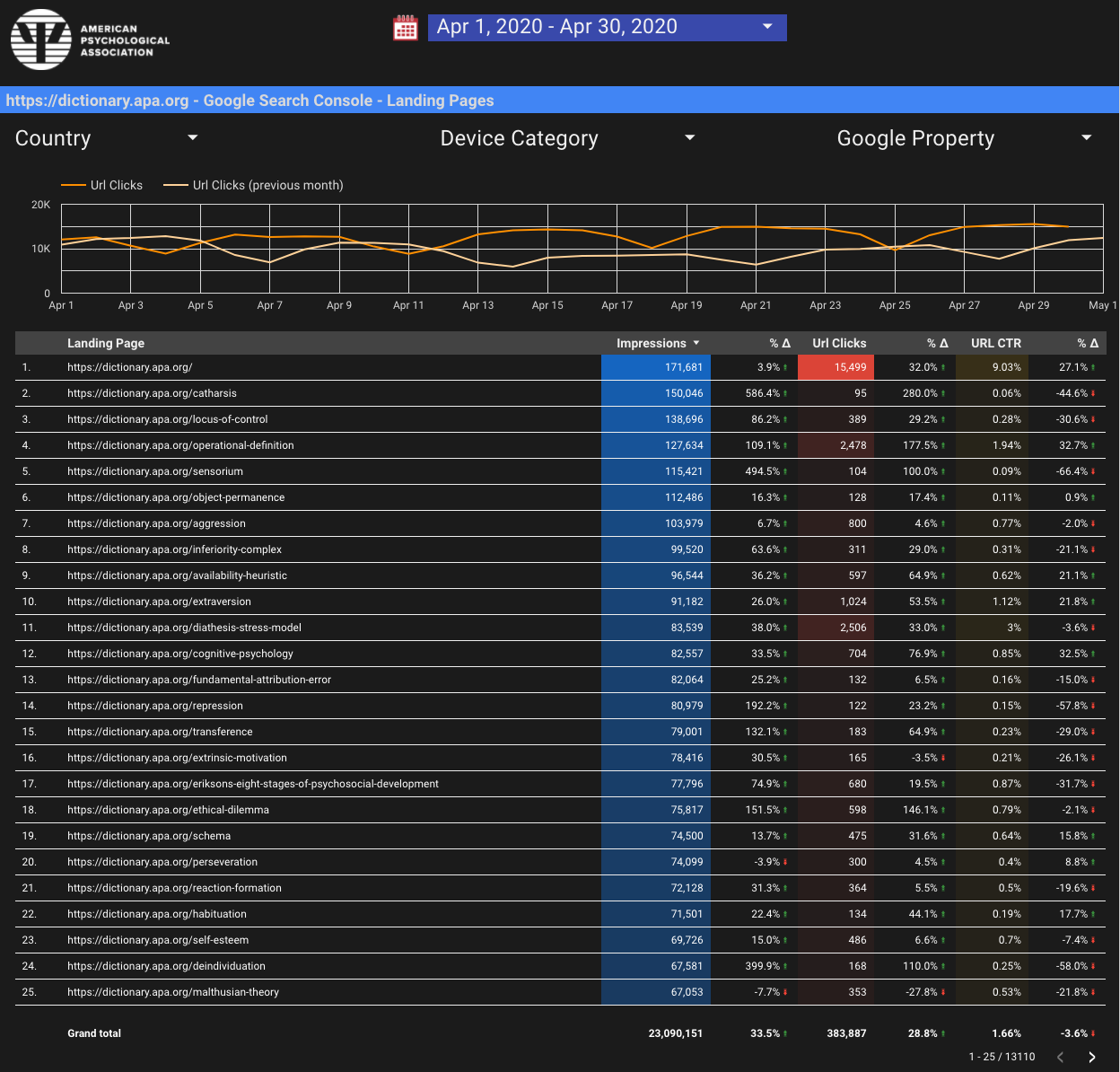
Flip the card over to view some of the SEO reports for April 2020.
The APA Dictionary of Psychology & SEO
The APA Dictionary of Psychology has more than 25,000 authoritative entries across 90 subfields of psychology.
View the Google Search Console reports below to see how the Dictionary site did with SEO metrics in April 2020.
DoP Site - GSC - Queries Report (April 2020)
DoP Site - GSC - Landing Pages Report (April 2020)
Visit the DoP Site

Are most of the visitors to APA's web applications on desktop or mobile?
Most users are still on desktop devices... but the ratio is different for all of the apps.
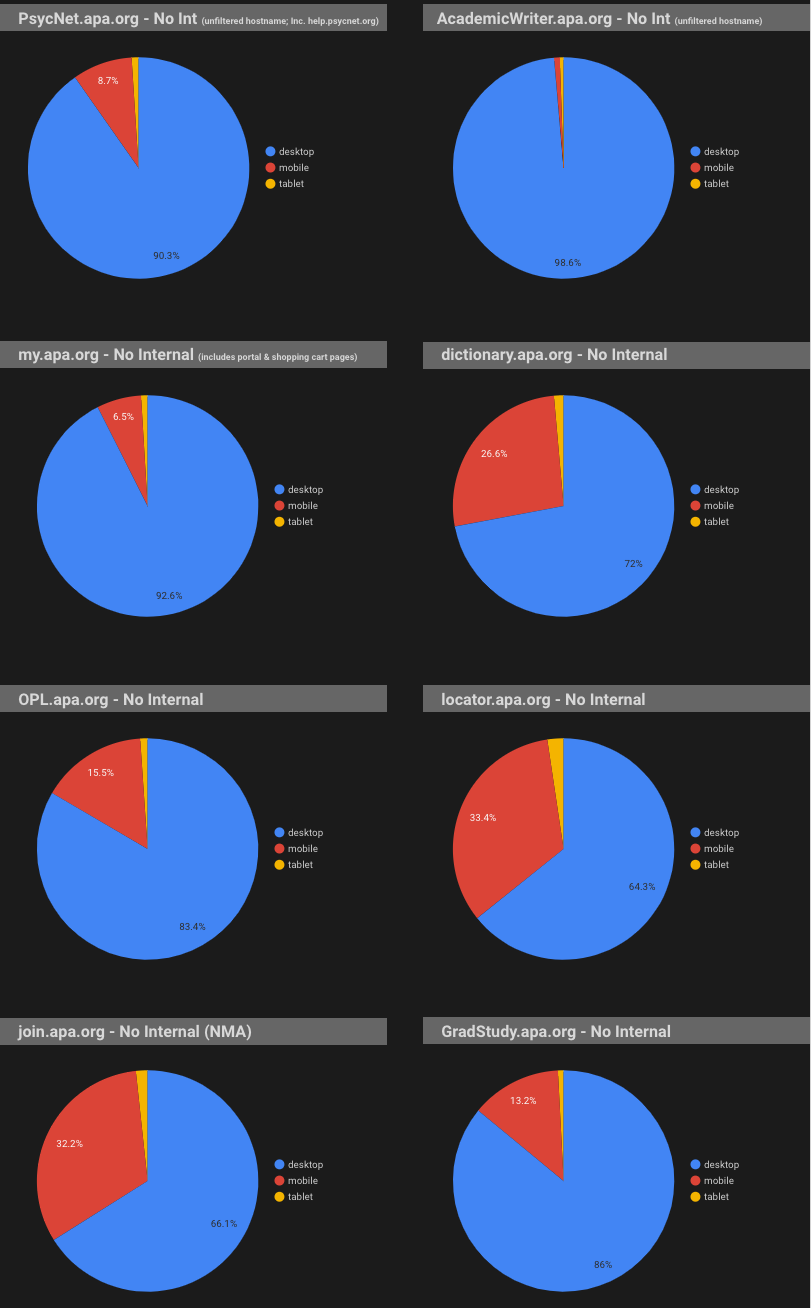
Flip the card over to see the device category breakdown from Google Analytics for April 2020.
APA Web Apps - Device Category Breakdown - April 2020
Desktop is still the primary device which visitors use to access APA's web applications.
But there are different ratios for each device. For example, almost 99% of users are on desktop deviced when on Academic Writer, wheras the Psychologist Locator has 64% of users on desktops, 33% on mobile devices, and about 3% of laptops.
APA Web Applications - GA - Device Categories Report (April 2020)
Have you ever heard of "web accessibility"?
Web accessibility is the inclusive practice of ensuring there are no barriers that prevent interaction with, or access to, websites on the World Wide Web by people with physical disabilities, situational disabilities, and socio-economic restrictions on bandwidth and speed. (Wikipedia)
Flip the card over to learn more.
Web Accessibility & APA's Sites/Apps
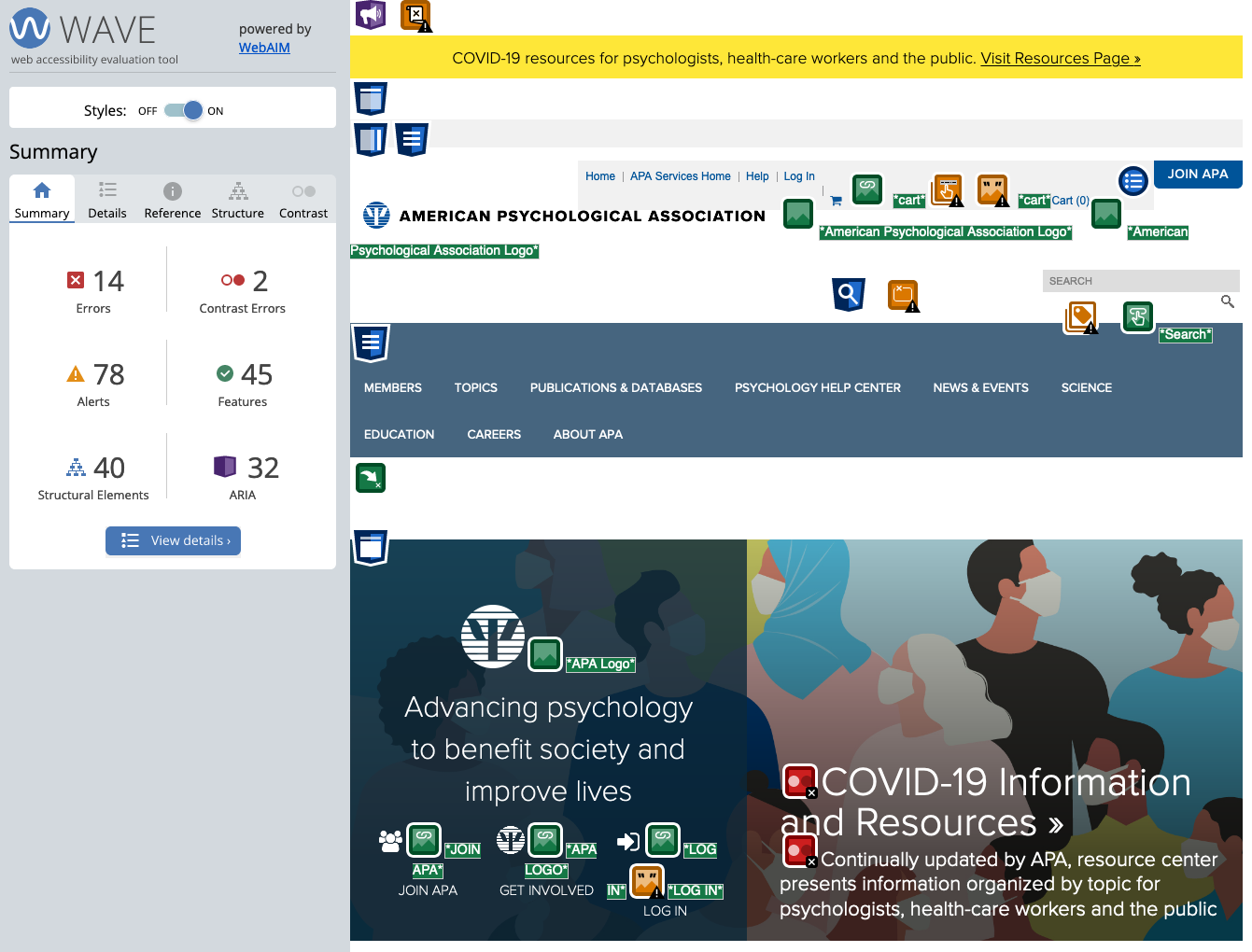
While developing new sites and applications, we run our sites through tools such as WAVE to look for web accessibility issues. Such issues could be low contrast on text, missing alt text on images, or empty form labels.
While many of our sites and apps have little or no web accessibility issues (e.g., Academic Writer), others we plan to tackle any issues in the future.
View the Web Accessibility Statement on www.apa.org to learn more about how APA is committed to ensure our sites are accessible to the widest possible audiences.